

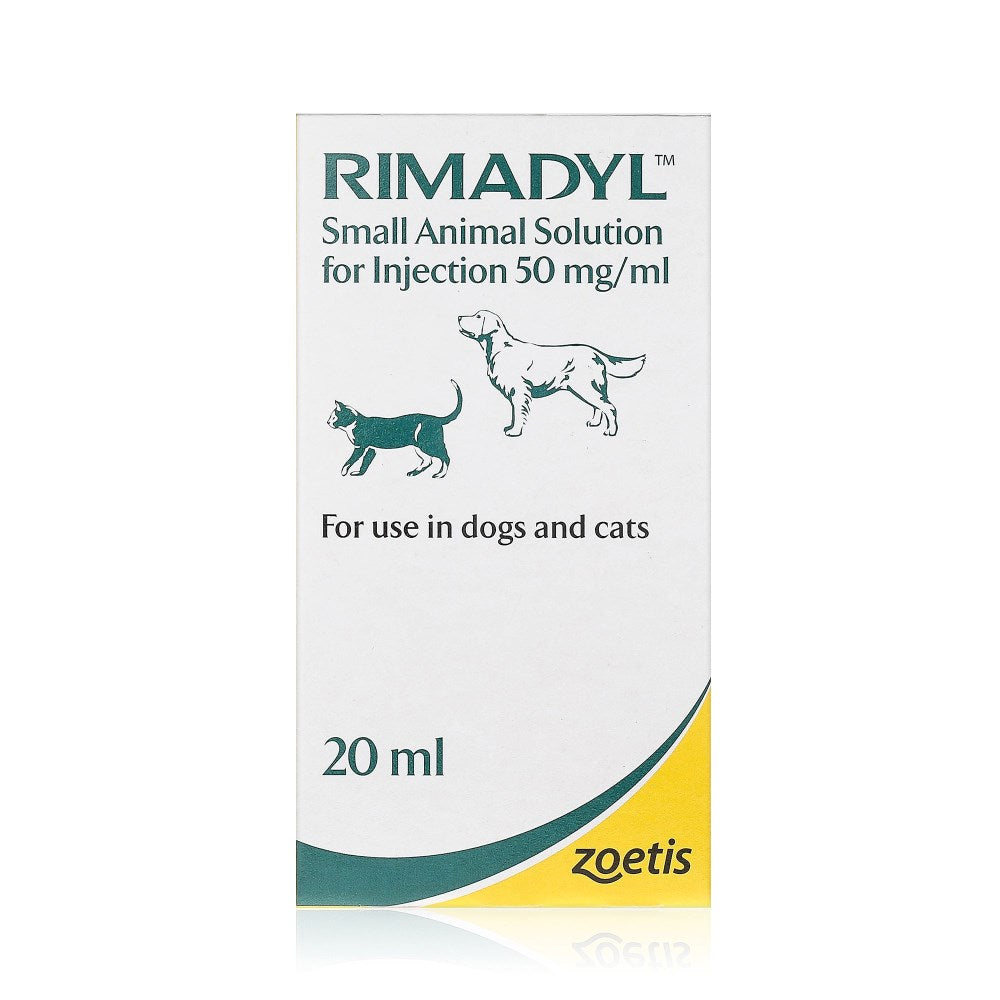
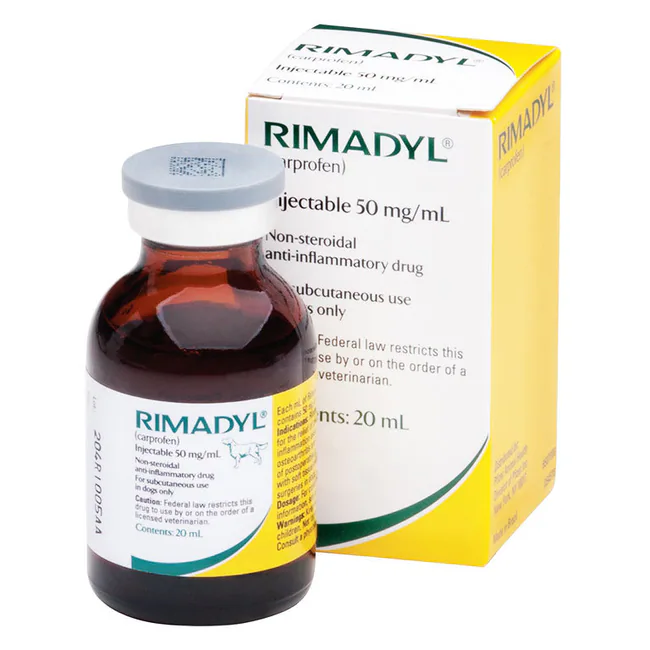

Buy Rimadyl 20mL Injection Online
Rimadyl Injectable (carprofen) is a non-steroidal anti-inflammatory drug (NSAID) prescribed by veterinarians for the relief of pain and inflammation in dogs. Formulated as a sterile solution for subcutaneous injection, it is widely utilized in clinical practice for managing postoperative pain associated with soft tissue and orthopedic surgeries, as well as controlling pain and inflammation related to osteoarthritis.
What Is Rimadyl 20mL Injection?
Rimadyl Injectable is a prescription-only veterinary NSAID containing carprofen at a concentration of 50 mg/mL. Manufactured by Zoetis, Rimadyl is one of the most established and trusted anti-inflammatory medications in canine veterinary medicine.
The 20 mL multi-dose vial provides veterinarians with an immediate, rapid-acting parenteral treatment option. It is typically administered prior to or during surgical procedures to establish baseline analgesia before the patient wakes up, or as an initial clinical treatment before transitioning the patient to oral carprofen chewables or tablets for home management.
Product Specifications Overview
| Characteristic | Specification Detail |
| Product Name | Rimadyl Injectable Solution |
| Active Ingredient | Carprofen (50 mg/mL) |
| Drug Class | Non-Steroidal Anti-Inflammatory Drug (NSAID) |
| Formulation | Sterile Aqueous Injectable Solution |
| Target Species | Dogs |
| Primary Indications | Surgical Analgesia (Soft Tissue & Orthopedic), Osteoarthritis Pain |
| Route of Administration | Subcutaneous Injection (SQ) |
| Container Size | 20 mL Multi-Dose Amber Vial |
| Regulatory Status | Prescription Only (Rx) |
Key Features and Benefits
-
Rapid Onset of Relief: Delivers prompt pain relief and anti-inflammatory activity shortly after subcutaneous administration.
-
Effective Perioperative Analgesia: Reduces tissue swelling and postoperative discomfort when administered prior to surgical intervention.
-
Targeted COX-2 Selectivity: Demonstrates preferential inhibition of the cyclooxygenase-2 (COX-2) enzyme, providing anti-inflammatory benefits while sparing constitutive physiological pathways.
-
Seamless Oral Transition: Serves as an ideal initial dose in clinic, allowing a smooth transition to oral Rimadyl caplets or chewable tablets for ongoing home therapy.
Mechanism of Action
Carprofen belongs to the propionic acid class of NSAIDs. It works primarily by inhibiting the cyclooxygenase (COX) enzyme system, which converts arachidonic acid into inflammatory prostaglandins and thromboxanes.
-
Inhibition of Prostaglandin Synthesis: By suppressing the COX-2 enzyme pathway induced during tissue injury, carprofen prevents the release of inflammatory mediators ($PGE_2$) that cause localized edema, fever, and pain sensitization.
-
Peripheral and Central Effects: Carprofen exerts both peripheral anti-inflammatory action at the site of tissue damage and central analgesic effects within the spinal cord and brain.
-
Chiral Properties: Carprofen exists as a racemic mixture of $S(+)$ and $R(-)$ enantiomers, with the $S(+)$ enantiomer possessing predominant anti-inflammatory activity.
Clinical Indications and Uses
-
Postoperative Surgical Pain: Indicated for the control of postoperative pain and inflammation following orthopedic (e.g., CCL repair, fracture fixation) and soft tissue surgeries (e.g., spay/neuter, mass extractions).
-
Osteoarthritis Flare-Ups: Used in clinical settings for rapid relief of severe, acute joint pain and mobility impairment caused by canine degenerative joint disease.
Administration and Dosage Guidelines
Note: Rimadyl Injectable is a prescription product that must be administered under the direct order and supervision of a licensed veterinarian.
-
Approved Route: Subcutaneous (SQ) injection only.
-
Standard Recommended Dosage: $2.2\text{ mg/lb}$ ($4.4\text{ mg/kg}$) of body weight once daily, or divided into $1.1\text{ mg/lb}$ ($2.2\text{ mg/kg}$) administered twice daily.
-
Surgical Protocol: To provide perioperative analgesia, administer subcutaneously approximately 2 hours prior to the surgical procedure.
-
Transition to Oral Therapy: After initial subcutaneous administration, oral carprofen therapy (tablets or chewables) may be initiated 24 hours later at the same daily mg/kg dosage rate.
Safety Information, Precautions, and Contraindications
+-----------------------------------------------------------------------------------+
|                                 SAFETY WARNING                                    |
|  For subcutaneous use in dogs ONLY. Do not use in cats. NSAID therapy carries     |
|  risks of renal, hepatic, and gastrointestinal adverse reactions. Screening and   |
|  monitoring (blood biochemistry) are recommended prior to administration.         |
+-----------------------------------------------------------------------------------+
-
Species Limitations: Do not use in cats. Feline metabolism of carprofen is significantly reduced, posing a severe risk of fatal toxicity and renal failure.
-
Contraindications: Do not administer to dogs with known hypersensitivity to carprofen or other NSAIDs. Contraindicated in dogs with active gastrointestinal ulceration, bleeding disorders, or severe renal/hepatic impairment.
-
Concomitant Therapy: Do not use concurrently with other NSAIDs (e.g., meloxicam, deracoxib, firocoxib) or systemic corticosteroids (e.g., prednisone, dexamethasone), as this drastically increases the risk of severe gastrointestinal ulceration.
-
Potential Side Effects: Gastrointestinal signs are the most common adverse reactions (vomiting, diarrhea, decreased appetite, lethargy). Rare but serious side effects include hepatotoxicity or acute renal failure. Discontinue therapy immediately if adverse reactions occur.
Storage and Handling Requirements
-
Refrigeration Required: Store under refrigeration between 2°C and 8°C (36°F and 46°F). Protect from freezing.
-
Light Sensitivity: Keep the 20 mL vial inside its outer carton when not in use to safeguard the active solution against light exposure.
-
Aseptic Technique: Use clean, sterile needles and syringes for every withdrawal to preserve multi-dose vial integrity.
Purchasing Regulated Veterinary Medications Online
When purchasing prescription veterinary pharmaceuticals online, adherence to regulatory safety standards is essential:
-
Valid Prescription: Legitimate suppliers require a official prescription issued by a licensed veterinarian following a proper diagnostic evaluation.
-
Temperature-Controlled Shipping: Cold-chain packaging is vital for Rimadyl Injectable during transit to ensure the temperature-sensitive formulation remains within proper storage ranges.
-
Authenticity Assurance: Ensure medications are sourced directly through authorized pharmaceutical distributors to avoid counterfeit or compromised products.
Where To Buy Rimadyl Injectable Online
World Equine Vet offers an extensive selection of authentic, manufacturer-sourced veterinary pharmaceuticals, surgical supplies, and clinic consumables for veterinary practices and livestock operations worldwide.
-
Access genuine Zoetis Rimadyl Injectable 20 mL backed by verified product sourcing.
-
Benefit from temperature-monitored, cold-chain shipping logistics designed to preserve injectable drug stability.
-
Coordinate prescription verification and order fulfillment directly with our dedicated customer support team.
Visit World Equine Vet to browse our complete catalog of anti-inflammatory solutions, surgical analgesics, and essential veterinary equipment.
Frequently Asked Questions (FAQs)
1. What is the active concentration of Rimadyl Injectable 20 mL?
Rimadyl Injectable contains 50 mg of carprofen per milliliter (50 mg/mL) in a 20 mL multi-dose vial.
2. Can Rimadyl Injectable be given to cats?
No. Rimadyl Injectable is strictly approved for dogs only. Cats lack essential metabolic pathways to clear carprofen effectively, leading to high risks of severe toxicity and organ failure.
3. How is Rimadyl Injectable administered?
It is approved strictly for subcutaneous (SQ) injection in dogs. It should not be administered intravenously (IV) or intramuscularly (IM).
4. Does Rimadyl Injectable require refrigeration?
Yes. Rimadyl Injectable must be kept refrigerated at temperatures between 2°C and 8°C (36°F to 46°F).
5. How soon after an injection can a dog switch to Rimadyl chewables?
Oral carprofen therapy can typically be started 24 hours after a 24-hour single dose injection ($4.4\text{ mg/kg}$) or 12 hours after a half-dose injection ($2.2\text{ mg/kg}$), as directed by the treating veterinarian.




Reviews
There are no reviews yet.