
Buy Baytril 100 Online
Baytril 100 (enrofloxacin) is a broad-spectrum, injectable antimicrobial solution widely utilized in veterinary medicine for the treatment of susceptible bacterial infections. Recognized for its rapid bactericidal action, Baytril 100 belongs to the fluoroquinolone class of antibiotics. It is formulated specifically for targeted therapeutic applications in livestock, such as cattle and swine, to address severe respiratory conditions, enteric diseases, and secondary bacterial complications.
When evaluating antimicrobial options for livestock health management, understanding the active ingredient, spectrum of activity, administration protocols, and regulatory withdrawal periods is essential. This detailed guide provides veterinarians, livestock managers, and equine care professionals with an objective, thoroughly researched overview of Baytril 100, covering its pharmacology, clinical indications, dosing considerations, safety profile, and purchasing guidelines.
What Is Baytril 100?
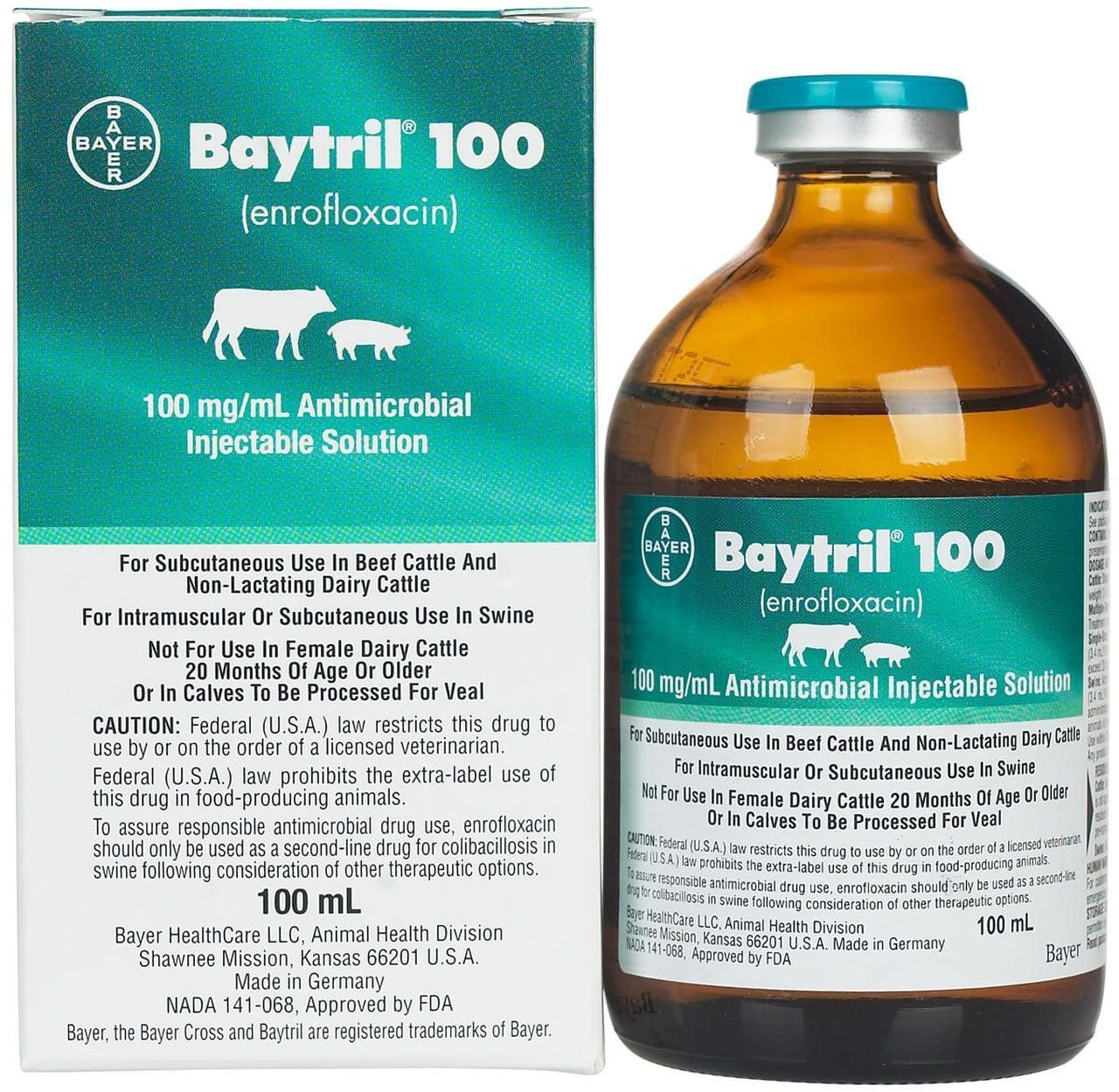
Baytril 100 is a prescription veterinary injectable solution containing enrofloxacin at a concentration of 100 mg/mL. Developed originally by Bayer Animal Health (now Elanco), it is one of the most established fluoroquinolones used in veterinary practice.
The primary indication for Baytril 100 is the treatment and control of Bovine Respiratory Disease (BRD) associated with major bacterial pathogens such as Mannheimia haemolytica, Pasteurella multocida, Histophilus somni, and Mycoplasma bovis. In swine, it is indicated for Swine Respiratory Disease (SRD) associated with Actinobacillus pleuropneumoniae, Pasteurella multocida, Haemophilus parasuis, and Streptococcus suis.
Fluoroquinolones like enrofloxacin act directly on bacterial DNA replication, making them potent tools against gram-negative and select gram-positive pathogens. Because Baytril 100 is a prescription-only antimicrobial subject to strict regulatory oversight globally, its use requires accurate diagnosis, veterinary supervision, and strict adherence to label guidelines to prevent the development of antimicrobial resistance.
Baytril 100 Overview
Maintaining herd health and managing disease outbreaks in production animals requires fast-acting, reliable therapeutic interventions. Respiratory infections in cattle and swine can escalate rapidly, causing severe lung tissue damage, reduced weight gain, and increased mortality if left untreated.
Baytril 100 is formulated to achieve high concentration levels in target tissues—specifically the lungs and respiratory secretions—shortly after administration. Its concentration-dependent bactericidal activity allows for effective management of acute respiratory crises.
| Characteristic | Specification Detail |
| Product Name | Baytril 100 |
| Active Ingredient | Enrofloxacin (100 mg/mL) |
| Drug Class | Fluoroquinolone Antimicrobial |
| Formulation | Sterile Injectable Solution |
| Primary Species | Cattle (Beef and Non-Lactating Dairy), Swine |
| Primary Indications | Bovine Respiratory Disease (BRD), Swine Respiratory Disease (SRD) |
| Route of Administration | Subcutaneous (Cattle), Intramuscular or Subcutaneous (Swine) |
| Regulatory Status | Prescription Only (Rx) / Veterinary Oversight Required |
Key Features of Baytril 100
-
Broad-Spectrum Bactericidal Activity: Effective against a wide array of gram-negative and gram-positive pathogens, as well as Mycoplasma species.
-
Rapid Tissue Penetration: Reaches therapeutic concentrations in pulmonary tissue and respiratory secretions within hours of administration.
-
Concentration-Dependent Killing: Utilizes high peak serum and tissue levels to rapidly neutralize target bacteria.
-
Flexible Dosing Regimens (Cattle): Approved for both single-dose therapy (high-dose short course) and multiple-day therapy depending on disease severity and clinical strategy.
-
Targeted BRD Pathogen Coverage: Specifically labeled for the four major BRD pathogens (M. haemolytica, P. multocida, H. somni, and M. bovis).
Product Specifications and Presentation
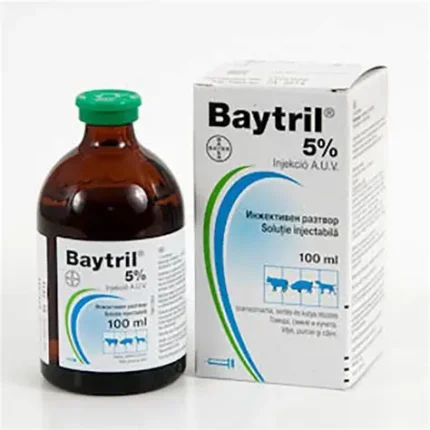
Baytril 100 is supplied as a clear, sterile, amber or colorless aqueous solution intended for parenteral administration.
-
Concentration: Each milliliter contains 100 mg of enrofloxacin.
-
Excipients: Contains L-arginine, n-butyl alcohol as a preservative, and water for injection.
-
Available Sizes: Typically packaged in multi-dose amber glass or durable polymer bottles of 100 mL, 250 mL, and 500 mL to accommodate varying herd sizes and treatment protocols.
-
Packaging: Encased in protective cartons to safeguard the solution from light exposure prior to use.
How Baytril 100 Works (Mechanism of Action)
Enrofloxacin exerts its bactericidal effect by inhibiting bacterial DNA gyrase (topoisomerase II) and topoisomerase IV. These enzymes are critical for bacterial DNA replication, transcription, repair, and recombination.
-
Enzyme Inhibition: By binding to these essential enzymes, enrofloxacin prevents the uncoiling and resealing of bacterial DNA strands.
-
DNA Damage: Supercoiling errors lead to irreversible double-stranded DNA breaks inside the bacterial cell.
-
Rapid Cell Death: The structural collapse of bacterial DNA halts protein synthesis and leads to rapid cell lysis, even during non-replicating phases of bacterial growth.
Because Baytril 100 exhibits concentration-dependent killing, the ratio of the maximum concentration ($C_{\max}$) or the Area Under the Curve (AUC) relative to the Minimum Inhibitory Concentration (MIC) of the target pathogen determines its clinical efficacy.
Intended Veterinary Context and Clinical Uses
1. Bovine Respiratory Disease (BRD)
BRD, often referred to as “shipping fever,” is a complex multifactorial disease triggered by stress, viral infections, and secondary bacterial invasion. Baytril 100 is indicated for:
-
Treatment of Individual Sick Animals: Administered at the onset of clinical signs (fever, nasal discharge, dyspnea, lethargy) to stop bacterial proliferation.
-
Control of Disease in High-Risk Groups: Administered to cattle arriving at feedlots or backgrounding facilities when groups show high susceptibility to acute BRD outbreaks.
2. Swine Respiratory Disease (SRD)
Respiratory infections in swine herds can spread rapidly through confinement units. Baytril 100 is utilized in swine for:
-
Treatment of SRD: Addressing acute respiratory disease caused by Actinobacillus pleuropneumoniae, Pasteurella multocida, Haemophilus parasuis, and Streptococcus suis.
Veterinary and Equine Considerations
Equine Use and Regulatory Warnings
While enrofloxacin as a chemical compound is sometimes used off-label by veterinarians in equine practice for specific severe infections (such as osteomyelitis, deep soft tissue wounds, or resistant gram-negative pleuropneumonia), Baytril 100 is not approved by regulatory authorities (such as the US FDA or EMA) for use in horses.
-
Articular Cartilage Toxicity in Young Horses: Fluoroquinolones, including enrofloxacin, have been shown to cause arthropathy and articular cartilage erosion in growing, immature animals (foals).
-
Tissue Reaction: Parenteral administration of Baytril 100 in horses can cause localized tissue irritation, muscle necrosis, or phlebitis if given intravenously without proper dilution.
-
Extra-Label Drug Use (ELDU): Any use of Baytril 100 in equine medicine constitutes Extra-Label Drug Use. In many jurisdictions, ELDU of fluoroquinolones is strictly restricted or regulated by law. Equine practitioners must exercise clinical discretion, establish a valid Veterinarian-Client-Patient Relationship (VCPR), and evaluate potential risks before considering off-label fluoroquinolone therapy in horses.
Benefits and Important Considerations
Benefits
-
Fast Clinical Response: Rapid absorption from the injection site leads to swift reduction in systemic fever and respiratory distress.
-
Mycoplasma Efficacy: Unlike beta-lactam antibiotics (such as penicillins and cephalosporins) which target cell wall synthesis, fluoroquinolones attack internal DNA machinery. This makes Baytril 100 effective against Mycoplasma species, which lack a bacterial cell wall.
-
Multiple Administration Options: Choice between single-dose therapeutic protocols or lower-dose multi-day treatments in cattle offers management flexibility.
Considerations
-
Strict Withdrawal Periods: Food animal producers must adhere strictly to statutory slaughter withdrawal times to ensure meat safety.
-
Antimicrobial Stewardship: As a critically important antibiotic class in human and veterinary medicine, fluoroquinolones should be selected based on diagnostic culture and susceptibility testing whenever feasible.
Administration, Dosage, and Handling
Note: Baytril 100 is a prescription medicine. Administration must always strictly adhere to the product label instructions or explicit directions from a licensed veterinarian.
Cattle Dosing Protocols (Subcutaneous Use Only)
-
Single-Dose Therapy (BRD Treatment & Control): Administered once subcutaneously at 7.5 to 12.5 mg/kg body weight (3.4 to 5.7 mL per 100 lbs).
-
Multi-Day Therapy (BRD Treatment): Administered subcutaneously at 2.5 to 5.0 mg/kg body weight (1.1 to 2.3 mL per 100 lbs) once daily for 3 to 5 consecutive days.
-
Volume Limits: Do not inject more than 20 mL per single subcutaneous injection site to minimize local tissue damage.
Swine Dosing Protocols (Subcutaneous or Intramuscular Use)
-
SRD Treatment: Administered at 7.5 mg/kg body weight (3.4 mL per 100 lbs) as a single dose, or across multiple days as directed by a veterinarian.
-
Volume Limits: Do not inject more than 5 mL per single intramuscular injection site in swine.
Important Safety Information, Precautions, and Contraindications
+-----------------------------------------------------------------------------------+
|                                 SAFETY WARNING                                    |
|  Baytril 100 is a prescription antimicrobial. Extra-label use in food-producing   |
|  animals is strictly prohibited or regulated in many countries. Do not use in     |
|  lactating dairy cattle or calves intended for processing into veal.              |
+-----------------------------------------------------------------------------------+
-
Human Warnings: Keep out of reach of children. Direct contact may cause skin or eye irritation. Individuals with a known hypersensitivity to fluoroquinolones should avoid handling the product. In case of accidental self-injection, seek immediate medical attention.
-
Food Safety & Withdrawal Times:
-
Cattle Slaughter Withdrawal: Varies by dosing regimen (typically 28 days for single-dose high-level administration; refer to regional package inserts for exact country-specific withdrawal periods).
-
Milk Residue: Not for use in female dairy cattle 20 months of age or older, or in calves to be processed for veal.
-
-
Contraindications: Do not administer to animals with known hypersensitivity to enrofloxacin or other quinolones. Do not administer intravenously or intra-arterially.
Storage and Handling Guidelines
Proper storage conditions maintain the stability, clarity, and efficacy of Baytril 100 throughout its shelf life:
-
Temperature Control: Store at controlled room temperature between 20°C to 25°C (68°F to 77°F). Protect from freezing and excessive heat.
-
Light Protection: Keep vials stored in their original outer carton when not in immediate use, as enrofloxacin solution can degrade upon prolonged exposure to direct light.
-
In-Use Shelf Life: Once pierced, multi-dose vials should be handled using aseptic techniques and used within the timeframe specified on the product label (typically 28 days after first broaching).
-
Precipitation Check: Inspect the bottle prior to administration. Do not use if the solution appears cloudy, discolored, or contains visible particulate matter.
Purchasing Considerations for Regulated Veterinary Antibiotics
Acquiring veterinary prescription medications requires strict compliance with local regulatory frameworks:
-
Veterinary Prescription Requirement: Legitimate suppliers require a valid prescription from a licensed veterinarian prior to dispensing Baytril 100.
-
Authenticity and Chain of Custody: Ensure product sourcing from verified distributors to avoid counterfeit formulations or improperly stored biologicals.
-
Regulatory Compliance: Verify that the product holding and import practices comply with your regional authorities (e.g., FDA, EMA, APVMA, or local agriculture departments).
Where To Buy Baytril 100 Online
When sourcing critical veterinary supplies for farm management, selecting an established, compliant supplier ensures product integrity and reliable delivery. World Equine Vet provides access to verified veterinary products, farm supply pharmaceuticals, and healthcare equipment for international agricultural and veterinary operations.
At World Equine Vet, we prioritize customer service, product authenticity, and strict adherence to veterinary distribution standards. Buyers can access comprehensive product documentation, verify prescription requirements, and coordinate secure delivery for their veterinary facilities.
-
Explore authentic veterinary pharmaceuticals on the World Equine Vet online catalog.
-
Consult with your managing veterinarian to ensure correct prescription submission and dosing protocols prior to ordering.
-
Benefit from transparent shipping policies and dedicated customer care tailored to professional livestock and veterinary managers.
Frequently Asked Questions (FAQs)
1. What is the active ingredient in Baytril 100?
Baytril 100 contains enrofloxacin at a concentration of 100 mg per milliliter (10% w/v). Enrofloxacin is a broad-spectrum fluoroquinolone bactericidal antibiotic.
2. Can Baytril 100 be used in horses?
Baytril 100 is not labeled or approved for use in horses by FDA or international regulatory authorities. While enrofloxacin is occasionally used off-label in equine medicine by licensed veterinarians for specific severe infections, it carries a risk of joint and cartilage damage in growing foals and local tissue irritation. Any equine use must be strictly overseen by a veterinarian under Extra-Label Drug Use guidelines.
3. How is Baytril 100 administered to cattle?
Baytril 100 is approved for subcutaneous (SQ) injection only in cattle. It should never be administered intravenously or intramuscularly in cattle.
4. What is the slaughter withdrawal period for Baytril 100?
Slaughter withdrawal times depend on the specific animal species, dosage, and national regulatory guidelines. For example, in cattle treated with a single high-dose subcutaneous protocol, withdrawal times are typically around 28 days. Always check your specific product packaging insert for exact regional withdrawal requirements.
5. Why is Baytril 100 prohibited in lactating dairy cattle?
To prevent antibiotic residues from entering the human food supply, Baytril 100 is contraindicated for use in female dairy cattle 20 months of age or older, as well as in veal calves.
Buy Baytril 100 (enrofloxacin) Online
Baytril 100 (enrofloxacin) remains a cornerstone antimicrobial solution for addressing critical respiratory diseases in cattle and swine. Its rapid bactericidal action, broad-spectrum coverage, and tissue-targeting capabilities make it a highly effective tool for modern livestock disease management. Successful outcomes rely on accurate diagnosis, adherence to labeled administration routes, responsible antimicrobial stewardship, and strict compliance with slaughter withdrawal periods.
For legitimate sourcing, verified product specifications, and professional service, visit World Equine Vet to meet your ongoing veterinary supply needs.


Reviews
There are no reviews yet.