

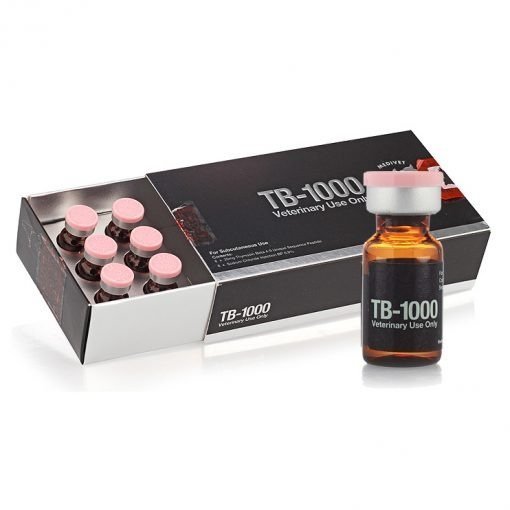
Buy TB 1000 Injection Online
TB 1000 Injection is a specialized veterinary formulation containing Thymosin Beta-4 (TB-4), a naturally occurring 43-amino-acid peptide sequence found in high concentrations in platelets, wound fluid, and various body tissues. In equine and veterinary medicine, TB 1000 Injection is utilized by veterinary professionals as a targeted recovery aid and tissue repair therapy. It plays a role in supporting cellular migration, vascular endothelial development (angiogenesis), soft tissue recovery, and inflammatory modulation in horses undergoing intensive training or recovering from musculoskeletal injury.
What Is TB 1000 Injection?
TB 1000 is an injectable peptide formulation whose primary active constituent is synthetic or bio-identical Thymosin Beta-4. Thymosin Beta-4 is an actin-sequestering protein that regulates the building blocks of cell structure (cytoskeleton). During tissue trauma, inflammation, or heavy physical exertion, endogenous Thymosin Beta-4 is naturally released to promote cell migration, blood vessel growth, and tissue remodeling.
In performance equine practice, soft tissue injuries—such as flexor tendonitis, suspensory desmitis, muscle tears, and joint capsule damage—represent significant recovery challenges. TB 1000 Injection is formulated to provide supplemental peptide levels to assist natural physiological recovery cascades, aid in collagen organization, and support vascular supply to poorly vascularized tissues like tendons and ligaments.
TB 1000 Injection Overview
Athletic performance horses experience significant physical stress across their musculoskeletal systems. Tendons and ligaments have limited blood supply, making their recovery slow and susceptible to scar tissue formation.
TB 1000 Injection is utilized as a supportive therapeutic option to encourage capillary regrowth and cellular remodeling around damaged fibers, helping to maintain tissue elasticity and flexibility.
| Characteristic | Specification Detail |
| Product Name | TB 1000 Injection |
| Active Molecule | Thymosin Beta-4 (TB-4) / Synthetic Peptide Sequence |
| Concentration / Strength | Typically 1000 mcg/mL (1 mg/mL) or 10 mg multi-dose vial setups |
| Formulation | Sterile Aqueous Solution or Lyophilized Powder for Reconstitution |
| Primary Species | Equine (Horses) |
| Primary Indications | Tendon/Ligament Recovery, Musculoskeletal Support, Angiogenesis |
| Routes of Administration | Intramuscular (IM), Subcutaneous (SQ), or Peri-lesional |
| Regulatory Status | Veterinary Prescription / Professional Supervision Required |
Key Features of TB 1000 Injection
-
Actin Regulation & Cell Mobility: Binds to G-actin monomer units, promoting cell movement to sites of tissue disruption.
-
Pro-Angiogenic Properties: Stimulates new micro-capillary formation, increasing oxygen and nutrient delivery to damaged tendons and ligaments.
-
Support for Collagen Organization: Assists in reducing disorganized scar tissue formation, helping maintain tissue pliability.
-
Inflammatory Modulation: Helps regulate local inflammatory cytokines without suppressing systemic immune defense mechanisms.
-
Systemic Distribution: Low molecular weight peptide structure allows efficient tissue penetration following parenteral administration.
TB 1000 Injection Specifications and Presentation
TB 1000 Injection is supplied as a sterile pharmaceutical-grade solution or as a lyophilized powder packaged with sterile diluent (such as Bacteriostatic Water for Injection or $0.9\%$ Sodium Chloride).
-
Active Ingredient: Thymosin Beta-4 (TB-4 peptide sequence).
-
Strength: Standard formulation concentrations vary by manufacturer (frequently $10\text{ mg/10 mL}$ or $1000\text{ mcg/mL}$).
-
Packaging: Multi-dose amber or clear glass vials (typically 10 mL volume) sealed with rubber stoppers and aluminum flip-off caps.
-
Excipients: Buffered saline, benzyl alcohol (preservative in liquid preparations), or mannitol (in lyophilized presentations).
How TB 1000 Injection Works (Mechanism of Action)
Thymosin Beta-4 is an essential regulator of cell migration and tissue repair:
               [ Musculoskeletal Micro-Trauma ]
                              │
                              ▼
                [ Administration of TB 1000 ]
                              │
                              ▼
      ┌───────────────────────┴───────────────────────┐
      │                                               │
      ▼                                               ▼
[ Actin Monomer Sequestration ]             [ Endothelial Cell Activation ]
 (Facilitates Cell Migration)                 (Promotes Micro-Angiogenesis)
      │                                               │
      └───────────────────────┬───────────────────────┘
                              │
                              ▼
             [ Target Tissue Matrix Remodeling ]
             [ & Reduced Scar Tissue Formation ]
-
G-Actin Sequestration: TB-4 binds to unpolymerized globular actin (G-actin) in a 1:1 complex. This prevents premature polymerization and maintains a pool of actin monomers that cells draw upon to reconfigure their internal skeleton, allowing dermal cells, myoblasts, and tenocytes to migrate rapidly across damaged tissue zones.
-
Endothelial Migration & Angiogenesis: TB-4 stimulates the migration and differentiation of vascular endothelial cells, accelerating the formation of new capillary blood vessels (angiogenesis) in injured areas.
-
Downregulation of Inflammatory Cascade: TB-4 moderates nuclear factor kappa-light-chain-enhancer of activated B cells ($NF\text{-}\kappa B$) and decreases excessive pro-inflammatory cytokine accumulation, reducing post-traumatic tissue swelling and fibrosis.
TB 1000 Injection Intended Veterinary Context and Clinical Uses
1. Equine Tendon & Ligament Management
Tendon and ligament injuries (e.g., superficial digital flexor tendonitis or suspensory branch desmitis) are slow to heal due to poor vascularity. TB 1000 is incorporated into recovery protocols to promote microvascularization and support functional fiber alignment.
2. Muscle Strain & Soreness
In performance horses undergoing high-intensity training, micro-tears in skeletal muscle fibers lead to chronic stiffness and pain. TB 1000 is used supportively to accelerate muscle recovery and reduce stiffness between competition events.
3. Joint Capsule & Soft Tissue Lavage Support
Used as an adjunct therapy alongside joint support treatments (such as hyaluronic acid or PSGAGs) to manage soft tissue structures within and around performance joints.
Veterinary and Equine Considerations
Competition Regulations and Testing
Veterinarians and equine owners must be aware of governing sport bodies’ rules:
-
FEI and Racing Integrity Authorities: Peptides, growth factors, and regulatory protein manipulators—including Thymosin Beta-4—are regulated or prohibited substances under the anti-doping policies of major equine authorities (e.g., FEI, HISA, ERA).
-
Withdrawal Periods & Competition Use: TB 1000 must not be administered during or leading into regulated competitive events. Always consult local racing commissions or equestrian federations regarding testing rules and clear therapeutic withdrawal periods.
Benefits and Important Considerations
Benefits
-
Parenteral Convenience: Absorbs systemically, delivering active peptides throughout the vascular network.
-
Targeted Soft Tissue Support: Complements traditional physical therapies, shockwave treatment, and controlled exercise rehabilitation.
-
Low Cytotoxicity: Being a bio-identical peptide sequence, it exhibits minimal cytotoxicity or metabolic stress when dosed appropriately.
Considerations
-
Prescription Requirement: Must be administered under the direction of a qualified veterinarian following a thorough diagnostic workup (e.g., ultrasonography, thermal imaging).
-
Not a Monotherapy: TB 1000 should form part of a comprehensive rehabilitation program including stall rest, controlled hand-walking, cold therapy, and proper farriery.
Administration, Dosage, and Handling
Note: TB 1000 is a specialized veterinary product. Administration protocols must be directed by a licensed veterinarian.
General Dosing Protocols (Equine)
-
Standard Therapeutic Regimen: $10\text{ mg}$ (e.g., $10\text{ mL}$ of $1000\text{ mcg/mL}$ solution) administered via deep intramuscular (IM) or subcutaneous (SQ) injection once weekly for 4 to 6 consecutive weeks during the primary recovery phase.
-
Maintenance Regimen: $10\text{ mg}$ administered once or twice monthly as determined by diagnostic re-evaluation (ultrasound scanning).
-
Peri-Lesional Administration: In specific clinical cases, equine veterinarians may perform targeted subcutaneous administration around an injured tendon sheath using aseptic technique.
Important Safety Information, Precautions, and Contraindications
+-----------------------------------------------------------------------------------+
|                                 SAFETY WARNING                                    |
|  For veterinary equine use only. Regulatory sports bodies strictly limit or        |
|  prohibit peptide administration prior to competition. Confirm governing body     |
|  rules before treatment. Maintain strict aseptic protocols during administration.  |
+-----------------------------------------------------------------------------------+
-
Neoplasia Warning: Because Thymosin Beta-4 stimulates cell migration and angiogenesis, it should not be administered to animals with diagnosed or suspected active neoplastic tumors or systemic malignancies.
-
Hypersensitivity: Discontinue use if localized swelling, systemic fever, or allergic hypersensitivity occurs following injection.
-
Sterile Technique: Injectable peptide preparations require strict aseptic hygiene. Contaminated injection procedures can introduce deep soft tissue infections or abscesses.
Storage and Handling Guidelines
-
Temperature Requirements:
-
Lyophilized (Unreconstituted): Store refrigerated between 2°C and 8°C (36°F to 46°F). Protect from extreme heat.
-
Reconstituted Solution: Once reconstituted with sterile diluent, store under continuous refrigeration (2°C to 8°C) and use within 28 days. Do not freeze liquid solutions as ice crystal formation can denature peptide structures.
-
-
Light Protection: Keep vials inside their outer carton to protect the active peptide solution from direct sunlight exposure.
Purchasing Considerations for Veterinary Peptide Therapies
When procuring veterinary peptides and therapeutic solutions online:
-
Purity & Quality Verification: Ensure the supplier provides verified, pharmaceutical-grade formulations manufactured under strict quality standards.
-
Valid Veterinary Oversight: Purchase only with appropriate veterinary consultation and prescription documentation.
-
Cold-Chain Logistics: Verify that temperature-sensitive peptide shipments are transported with insulated packaging and cold packs to preserve biological activity.
Where To Buy TB 1000 Injection Online
Selecting a verified supplier ensures product authenticity, correct storage, and reliable delivery. World Equine Vet offers access to authentic veterinary products, clinical supplies, and therapeutic solutions for equine operations and veterinary clinics worldwide.
At World Equine Vet, we prioritize customer service, product integrity, and transparent fulfillment standards.
-
Explore authentic veterinary products and recovery support options on the World Equine Vet catalog.
-
Consult with your veterinarian to establish valid treatment plans prior to ordering.
-
Benefit from secure packaging and reliable international shipping logistics.
Visit World Equine Vet today to browse our complete catalog of equine healthcare products.
Frequently Asked Questions (FAQs)
1. What is the active ingredient in TB 1000 Injection?
TB 1000 Injection contains synthetic or bio-identical Thymosin Beta-4 (TB-4), an actin-sequestering peptide that supports cellular migration and blood vessel growth.
2. What is TB 1000 used for in horses?
TB 1000 is used by equine veterinarians as a recovery aid to support tendon, ligament, and muscle repair, encourage micro-angiogenesis, and help manage localized soft tissue inflammation.
3. How is TB 1000 administered?
TB 1000 is typically administered via intramuscular (IM) or subcutaneous (SQ) injection under the direct supervision of a licensed veterinarian.
4. Is TB 1000 permitted in competitive horse racing or equestrian events?
No. Most governing bodies (such as the FEI, HISA, and global racing authorities) restrict or ban the use of peptide growth factors and cell-signaling substances in competition. Always verify specific medication guidelines and withdrawal periods with your governing authority.
5. How should reconstituted TB 1000 be stored?
Reconstituted liquid TB 1000 must be stored under refrigeration between 2°C and 8°C (36°F and 46°F), protected from direct light, and used within 28 days using aseptic technique.
Final Summary
TB 1000 Injection (Thymosin Beta-4) provides targeted support for soft tissue repair, endothelial cell migration, and micro-angiogenesis in horses recovering from tendon, ligament, or muscular strain. By facilitating natural actin dynamics and tissue remodeling, TB 1000 serves as a valuable adjunct in comprehensive equine rehabilitation protocols. Responsible use requires veterinary supervision, aseptic handling, and strict compliance with sport competition regulations.
For product information and veterinary supply needs, visit World Equine Vet.




Reviews
There are no reviews yet.