

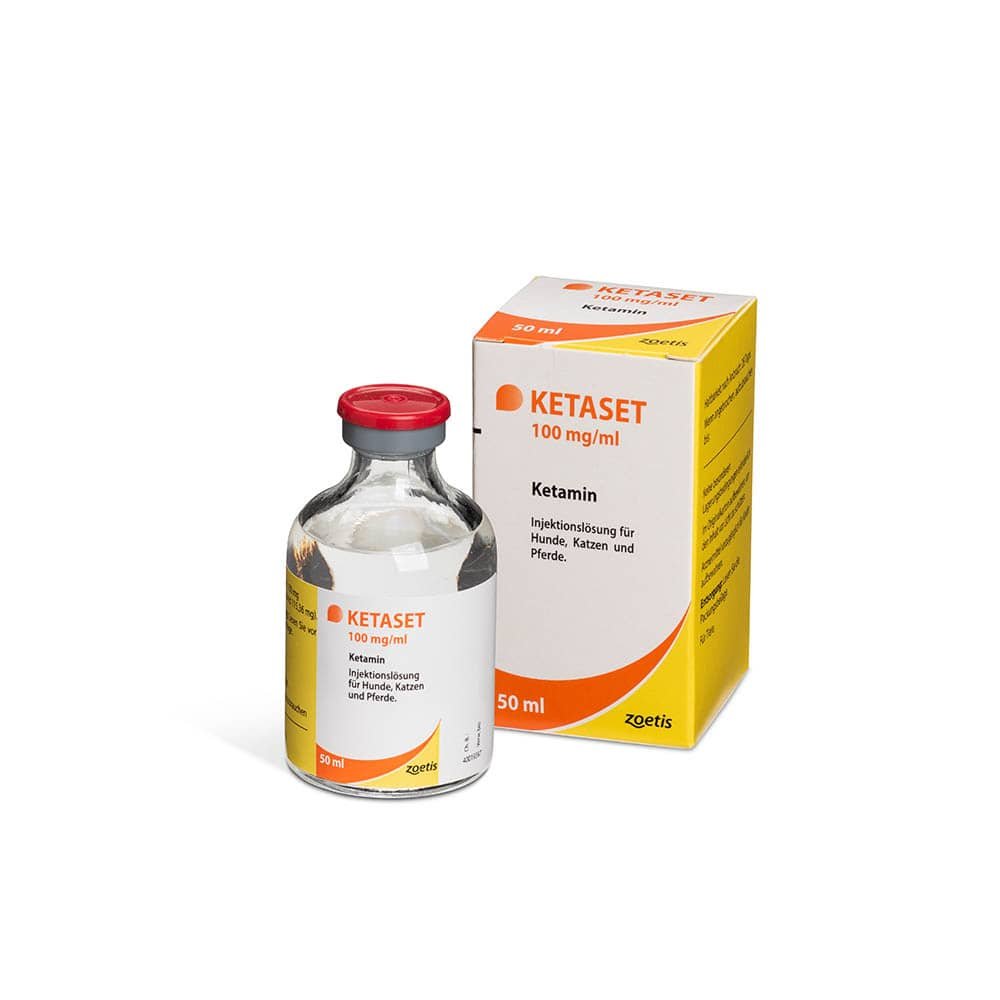
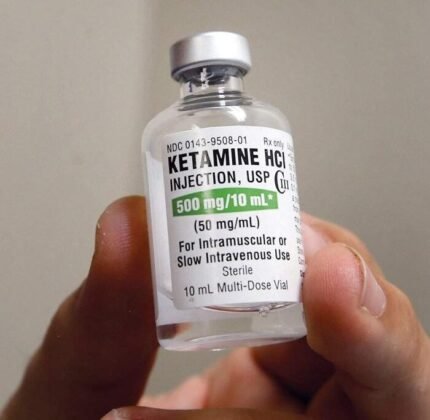
Buy Ketaset Injection Online
Ketaset Injection is a high-concentration, rapid-acting veterinary anesthetic solution formulated for general anesthesia, procedural restraint, and somatic pain management in animals. Containing Ketamine Hydrochloride, Ketaset is widely utilized across equine, canine, feline, exotic, and livestock veterinary medicine.
As a dissociative anesthetic agent, Ketaset induces profound somatic analgesia and central nervous system detachment while preserving critical autonomic reflexes. It is routinely paired with sedatives, tranquilizers, or muscle relaxants to ensure balanced anesthesia, muscle relaxation, and smooth recovery during surgical or diagnostic procedures.
What Is Ketaset Injection?
Ketaset Injection is a sterile, multi-dose parenteral solution containing Ketamine Hydrochloride as its active pharmaceutical ingredient (API). Classified as an NMDA ($N$-methyl-$D$-aspartate) receptor antagonist, it produces a state of “dissociative anesthesia,” characterized by:
-
Somatic Analgesia: Potent suppression of central and peripheral pain signaling pathways.
-
Functional Brain Dissociation: Unconsciousness where the animal is electroencephalographically disconnected from its surroundings.
-
Preserved Reflexes: Maintenance of normal pharyngeal, laryngeal, corneal, and pedal reflexes.
-
Cardiovascular Support: Mild sympathomimetic action that supports blood pressure and heart rate during induction.
Product Overview
Safe, predictable surgical restraint requires trusted induction agents. Ketaset Injection delivers rapid, repeatable anesthetic induction across multiple species. Because ketamine administered alone causes muscle hypertonicity and spontaneous movement, it is universally co-administered with $\alpha_2$-adrenoreceptor agonists (e.g., Xylazine, Medetomidine, Detomidine) or benzodiazepines (e.g., Diazepam, Midazolam) to achieve muscle relaxation and balanced surgical depth.
| Characteristic | Specification Detail |
| Product Name | Ketaset Injection |
| Active Ingredient | Ketamine Hydrochloride ($100\text{ mg/mL}$) |
| Pharmacological Class | Dissociative Anesthetic / NMDA Receptor Antagonist |
| Formulation | Sterile Clear Aqueous Solution |
| Target Species | Equine (Horses), Canines, Felines, Livestock, Exotics |
| Route of Administration | Intravenous (IV), Intramuscular (IM) |
| Vial Presentations | $10\text{ mL}$ Multi-Dose Vial / $50\text{ mL}$ Multi-Dose Vial |
| Regulatory Category | Controlled Prescription Veterinary Anesthetic |
Key Features of Ketaset Injection
-
Rapid Dissociative Action: Fast onset of surgical induction and profound somatic pain control.
-
Cardiovascular Stability: Maintains or slightly elevates mean arterial blood pressure and heart rate via central sympathetic stimulation.
-
Flexible Multi-Species Applications: Approved and trusted for horses, cats, dogs, small ruminants, and zoo species.
-
Synergistic Protocol Integration: Blends seamlessly into balanced anesthetic regimes alongside Xylazine, Detomidine, Diazepam, or Propofol.
-
Preserved Airway Reflexes: Helps maintain airway patency during brief field procedures or prior to endotracheal intubation.
Product Specifications and Presentations
Ketaset Injection is manufactured under strict pharmaceutical standards to ensure sterility, pyrogen-free quality, and exact dosing concentration:
-
Concentration: $100\text{ mg}$ Ketamine base per $\text{mL}$ ($100\text{ mg/mL}$).
-
10 mL Vial Presentation: $1000\text{ mg}$ total ketamine; ideal for small animal clinics, urgent care kits, or field bag portability.
-
50 mL Vial Presentation: $5000\text{ mg}$ total ketamine; economical multi-dose format designed for equine surgical suites and large animal operations.
-
Excipients: Benzethonium chloride as a preservative, water for injection, pH adjusted to $3.5\text{–}5.5$.
How Ketaset Works (Mechanism of Action)
Ketamine exerts its principal anesthetic and analgesic effects via non-competitive antagonism of central $N$-methyl-$D$-aspartate (NMDA) receptors:
                            [ Ketaset Injection (100mg/mL) ]
                                          │
            ┌─────────────────────────────┴─────────────────────────────┐
            ▼                                                           ▼
 [ Non-Competitive NMDA Antagonism ]                         [ Inhibition of Glutamate Pathways ]
            │                                                           │
            ▼                                                           ▼
 [ Thalamocortical & Limbic Dissociation ]                   [ Blockade of Central "Wind-Up" Pain ]
            │                                                           │
            ▼                                                           ▼
 [ Somatic Analgesia & Sedative State ]                      [ Prevention of Hyperalgesia ]
            │                                                           │
            └─────────────────────────────┬─────────────────────────────┘
                                          │
                                          ▼
             [ Surgical Anesthesia (When Paired with Muscle Relaxants) ]
-
Thalamocortical Dissociation: Electrically disconnects the limbic system from the neocortex, blocking sensory input processing while leaving lower brainstem function intact.
-
NMDA Antagonism & Wind-Up Suppression: Prevents central sensitization (“wind-up” pain), mitigating post-operative hypersensitivity.
-
Sympathomimetic Stimulation: Inhibits neuronal catecholamine reuptake, providing mild sympathetic support to maintain blood pressure.
Intended Veterinary Context and Clinical Uses
1. Equine Surgical Induction & Field Anesthesia
Used following premedication with an $\alpha_2$-agonist (e.g., Xylazine or Detomidine) to achieve rapid recumbency for short field procedures (castrations, laceration repairs) or prior to volatile gas anesthesia.
2. Small Animal Anesthesia (Dogs & Cats)
Combined with Medetomidine, Diazepam, or Acepromazine for short surgical protocols, dental procedures, diagnostic imaging, or intubation induction.
3. Livestock & Exotic Animal Immobilization
Utilized in cattle, sheep, goats, and wildlife for restraint, emergency interventions, and field surgery.
Veterinary and Animal Safety Considerations
+-----------------------------------------------------------------------------------+
|                                 SAFETY WARNING                                    |
|  1. MUST BE USED WITH A MUSCLE RELAXANT OR SEDATIVE (e.g., Xylazine, Diazepam).   |
|     Sole use of Ketamine causes hypertonia, muscle tremors, and rough recovery.   |
|  2. CONTROLLED SUBSTANCE: Handle, log, and store according to national laws.       |
|  3. APPLY OPHTHALMIC OINTMENT: Animals maintain open eyes with dilated pupils.    |
+-----------------------------------------------------------------------------------+
-
Muscle Rigidity: Ketamine alone induces hypertonia and involuntary muscle spasticity. Co-administration with a sedative or muscle relaxant is mandatory for balanced anesthesia.
-
Ocular Protection: Because animals kept under ketamine do not close their eyes, apply sterile ophthalmic lubricant to prevent corneal desiccation.
Benefits and Important Considerations
Benefits
-
Fast Onset: Intravenous (IV) uptake acts within 30 to 60 seconds; Intramuscular (IM) route takes effect within 3 to 5 minutes.
-
Strong Somatic Analgesia: Excellent suppression of skin, joint, and bone pain.
-
Cardiovascular Margin: Preferred for patients where sudden blood pressure drops must be avoided.
Considerations
-
Visceral Analgesia: Limited visceral pain control; supplemental analgesics (opioids or NSAIDs) are required for soft-tissue or abdominal surgery.
-
Emergence Reactions: Emergence delirium or twitching can occur if sedatives wear off prior to ketamine clearance.
Administration, Dosage, and Handling
Note: Dosing regimens must be calculated by a licensed veterinarian based on species, weight, health status, and concurrent premedications.
General Dosage Guidelines (Reference Only)
-
Equine Field Induction: Following full sedation with Xylazine ($1.1\text{ mg/kg}$ IV), Ketaset is typically dosed at $2.2\text{ mg/kg}$ IV ($2.2\text{ mL}$ per $100\text{ kg}$).
-
Canine/Feline Protocols: Dosed according to combination protocols (e.g., Ketamine/Valium IV or Ketamine/Medetomidine IM) at calculated mg/kg levels under strict monitoring.
-
Monitoring: Continuously monitor respiratory rate, pulse quality, mucosal color, and body temperature throughout procedure and recovery.
Important Safety Information, Precautions, and Contraindications
-
Contraindications: Do not use in animals with severe hypertension, head trauma/increased intracranial pressure, intraocular lesions, or severe renal/hepatic dysfunction.
-
Seizure History: Use with caution in animals with pre-existing epileptic or seizure disorders.
-
Pharyngeal Stimulation: Pharyngeal reflexes remain active; avoid triggering laryngospasm unless the airway is secured.
Storage and Handling Guidelines
-
Temperature: Store between 15°C and 25°C (59°F to 77°F). Protect from freezing.
-
Light Protection: Keep vials inside original outer cartons to shield from UV exposure.
-
Controlled Storage: Store in a locked safe or cabinet in compliance with local regulations governing controlled veterinary substances.
Purchasing Considerations for Controlled Anesthetics
When procuring Ketaset Injection online:
-
Licensing Requirements: Purchase requires valid veterinary credentials and compliance with controlled substance regulations in your jurisdiction.
-
Vial Selection: Choose between $10\text{ mL}$ vials for portability/low-volume needs or $50\text{ mL}$ vials for high-volume clinical practice.
-
Product Integrity: Confirm vials arrive with intact tamper-evident seals and clear batch tracking.
Where To Buy Ketaset Injection Online
Acquiring genuine veterinary anesthetics and clinical supplies is vital for animal welfare, surgical safety, and practice management. World Equine Vet provides access to high-grade veterinary pharmaceuticals, surgical equipment, and performance care supplies for equine clinics, livestock operations, and licensed veterinarians worldwide.
At World Equine Vet, we uphold strict quality standards, professional verification, and secure fulfillment.
-
Explore our catalog of veterinary anesthetics and pharmaceuticals on the World Equine Vet platform.
-
Review technical documentation and administration resources.
-
Benefit from professional packaging and dependable international delivery.
Visit World Equine Vet today to explore our full selection of veterinary products.
Frequently Asked Questions (FAQs)
1. What is Ketaset Injection used for in animals?
Ketaset Injection (Ketamine HCl $100\text{ mg/mL}$) is used as a dissociative anesthetic for surgical induction, short-term procedural restraint, and somatic pain control in horses, dogs, cats, livestock, and exotics.
2. What is the difference between the 10mL and 50mL Ketaset presentations?
Both contain the exact same $100\text{ mg/mL}$ Ketamine Hydrochloride concentration. The $10\text{ mL}$ vial ($1000\text{ mg}$ total) is ideal for small animals or mobile field kits, while the $50\text{ mL}$ vial ($5000\text{ mg}$ total) is designed for high-volume equine and livestock practice.
3. Can Ketaset be used as a standalone anesthetic?
No. Ketamine used alone causes muscle rigidity and rough recovery. It must always be combined with sedatives or muscle relaxants such as Xylazine, Detomidine, or Diazepam.
4. Is Ketaset Injection a controlled substance?
Yes. Ketamine Hydrochloride is a controlled substance in most jurisdictions due to its potential for misuse. Purchase and administration require authorized veterinary licensing.
5. How should Ketaset Injection be stored?
Store in a locked safe or cabinet at controlled room temperature (15°C–25°C), protected from direct sunlight.
Final Summary
Ketaset Injection ($10\text{ mL}$ and $50\text{ mL}$) is a core veterinary anesthetic providing rapid dissociative induction, strong somatic analgesia, and reliable cardiovascular support. When paired with appropriate sedatives and muscle relaxants, Ketaset ensures effective, controlled anesthesia across equine, small animal, and livestock practice. Safe use demands precise professional dosing, appropriate patient monitoring, and full regulatory compliance.
For verified veterinary pharmaceuticals and surgical supplies, visit World Equine Vet.
ketaset injection As an anaesthetic agent for diagnostic and surgical procedures. When used by intravenous or intramuscular injection, is best suited for short procedures. With additional doses, or by intravenous infusion, Ketamine can be used for longer procedures. If skeletal muscle relaxation is desired, a muscle relaxant should be used and respiration should be supported.
For the induction of anaesthesia prior to the administration of other general anaesthetic agents. To supplement other anaesthetic agents.
Specific areas of application or types of procedures :ketamin injection
When the intramuscular route of administration is preferred.
Debridement, painful dressings, and skin grafting in burned patients, as well as other superficial surgical procedures.
Neurodiagnostic procedures such as pneumoencephalograms, ventriculograms, myelograms, and lumbar punctures.
Diagnostic and operative procedures of the eye, ear, nose, and mouth, including dental extractions.
Note: Eye movements may persist during ophthalmological procedures.ketamin injection
Anaesthesia in poor-risk patients with depression of vital functions or where depression of vital functions must be avoided, if at all possible.
Orthopaedic procedures such as closed reductions, manipulations, femoral pinning, amputations, and biopsies.
Sigmoidoscopy and minor surgery of the anus and rectum, circumcision and pilonidal sinus.
Cardiac catheterization procedures.
Caesarean section; as an induction agent in the absence of elevated blood pressure.
Anaesthesia in the asthmatic patient, either to minimise the risks of an attack of bronchospasm developing, or in the presence of bronchospasm where anaesthesia cannot be delayed.
For intravenous infusion, intravenous injection or intramuscular injection.
NOTE: All doses are given in terms of ketamine base
Adults, elderly (over 65 years) and children:
For surgery in elderly patients ketamine has been shown to be suitable either alone or supplemented with other anaesthetic agents.
Preoperative preparations
Ketamine has been safely used alone when the stomach was not empty. However, since the need for supplemental agents and muscle relaxants cannot be predicted, when preparing for elective surgery it is advisable that nothing be given by mouth for at least six hours prior to anaesthesia.
Premedication with an anticholinergic agent (e.g. atropine, hyoscine or glycopyrolate) or another drying agent should be given at an appropriate interval prior to induction to reduce ketamine- induced hypersalivation.
Midazolam, diazepam, lorazepam, or flunitrazepam used as a premedicant or as an adjunct to ketamine, have been effective in reducing the incidence of emergence reactions.
Onset and duration
As with other general anaesthetic agents, the individual response to Ketamine is somewhat varied depending on the dose, route of administration, age of patient, and concomitant use of other agents, so that dosage recommendation cannot be absolutely fixed. The dose should be titrated against the patient’s requirements.
Because of rapid induction following intravenous injection, the patient should be in a supported position during administration. An intravenous dose of 2 mg/kg of bodyweight usually produces surgical anaesthesia within 30 seconds after injection and the anaesthetic effect usually lasts 5 to10 minutes. An intramuscular dose of 10 mg/kg of bodyweight usually produces surgical anaesthesia within 3 to 4 minutes following injection and the anaesthetic effect usually lasts 12 to 25 minutes. Return to consciousness is gradual.
A. Ketamine as the sole anaesthetic agent
Intravenous Infusion
The use of Ketamine by continuous infusion enables the dose to be titrated more closely, thereby reducing the amount of drug administered compared with intermittent administration. This results in a shorter recovery time and better stability of vital signs.
A solution containing 1 mg/ml of ketamine in dextrose 5% or sodium chloride 0.9% is suitable for administration by infusion.
General Anaesthesia Induction
An infusion corresponding to 0.5 – 2 mg/kg as total induction dose.
Maintenance of anaesthesia
Anaesthesia may be maintained using a microdrip infusion of 10 – 45 microgram/kg/min (approximately 1 – 3 mg/min).
The rate of infusion will depend on the patient’s reaction and response to anaesthesia. The dosage required may be reduced when a long acting neuromuscular blocking agent is used.
Intermittent Injection
Induction
Intravenous Route
The initial dose of Ketamine administered intravenously may range from 1 mg/kg to 4.5 mg/kg (in terms of ketamine base). The average amount required to produce 5 to 10 minutes of surgical anaesthesia has been 2.0 mg/kg. It is recommended that intravenous administration be accomplished slowly (over a period of 60 seconds). More rapid administration may result in respiratory depression and enhanced pressor response.
Dosage in Obstetrics
In obstetrics, for vaginal delivery or in caesarean section, intravenous doses ranging from 0.2 to 1.0 mg/kg are recommended (see section 4.6 Fertility, pregnancy and lactation).
Intramuscular Route
The initial dose of Ketamine administered intramuscularly may range from 6.5 mg/kg to 13 mg/kg (in terms of ketamine base). A low initial intramuscular dose of 4 mg/kg has been used in diagnostic manoeuvres and procedures not involving intensely painful stimuli. A dose of 10 mg/kg will usually produce 12 to 25 minutes of surgical anaesthesia.
Dosage in Hepatic Insufficiency:
Dose reductions should be considered in patients with cirrhosis or other types of liver impairment. (see section 4.4 Special Warnings and Special Precautions for Use)
Dosage in Obstetrics
Data are lacking for intramuscular injection and maintenance infusion of ketamine in the parturient population, and recommendations cannot be made. Available data are presented in Section 5.2.
Maintenance of general anaesthesia
Lightening of anaesthesia may be indicated by nystagmus, movements in response to stimulation, and vocalization. Anaesthesia is maintained by the administration of additional doses of Ketamine by either the intravenous or intramuscular route.
Each additional dose is from ½ to the full induction dose recommended above for the route selected for maintenance, regardless of the route used for induction.
The larger the total amount of Ketamine administered, the longer will be the time to complete recovery.
Purposeless and tonic-clonic movements of extremities may occur during the course of anaesthesia. These movements do not imply a light plane and are not indicative of the need for additional doses of the anaesthetic.
B. Ketamine as induction agent prior to the use of other general anaesthetics
Induction is accomplished by a full intravenous or intramuscular dose of Ketamine as defined above. If Ketamine has been administered intravenously and the principal anaesthetic is slow- acting, a second dose of Ketamine may be required 5 to 8 minutes following the initial dose. If Ketamine has been administered intramuscularly and the principal anaesthetic is rapid-acting, administration of the principal anaesthetic may be delayed up to 15 minutes following the injection of Ketamine.


Reviews
There are no reviews yet.