
Buy Ivermectin 250mL Injection Online
Ivermectin 250mL Injection is a broad-spectrum parenteral antiparasitic formulation designed for high-volume herd management across livestock operations, including cattle, swine, sheep, and goats. Containing a concentrated 1% ivermectin active solution, this multi-dose 250mL presentation enables efficient, cost-effective treatment of large herds suffering from internal helminths and external ectoparasites.
Understanding appropriate subcutaneous administration protocols, target parasite coverage, species-specific dosing, and mandatory agricultural withdrawal periods ensures optimal herd productivity and food safety compliance.
What Is Ivermectin 250mL Injection?
Ivermectin 250mL Injection is a sterile, ready-to-use injectable solution formulated with 1% ivermectin. Belonging to the macrocyclic lactone class of endectocides, ivermectin disrupts neurotransmission in invertebrate organisms, offering systemic control over gastrointestinal roundworms, lungworms, cattle grubs, sucking lice, and mange mites.
The 250mL multi-dose vial is engineered specifically for commercial livestock producers, high-density ranches, and veterinary practitioners managing routine mass-dosing or processing programs. Single 250mL vials provide enough medication to process up to 50 adult head of cattle, making it a cornerstone for cost-conscious, high-throughput health processing.
Ivermectin 250mL Injection Overview
Controlling subclinical and clinical parasite infestations directly impacts livestock profitability by protecting daily weight gains, feed efficiency, milk yields, and overall body condition scores.
Delivered via low-volume subcutaneous administration, Ivermectin 250mL Injection provides long-acting systemic availability that eliminates both adult parasites and migrating larval stages, including inhibited ($L_4$) Ostertagia ostertagi.
| Characteristic | Specification Detail |
| Product Name | Ivermectin 250mL Injection |
| Active Ingredient | Ivermectin ($10\text{ mg/mL}$ / $1\% w/v$) |
| Drug Class | Macrocyclic Lactone (Avermectin Endectocide) |
| Formulation | Sterile Non-Aqueous Injectable Solution |
| Primary Species | Cattle, Swine, Sheep, Goats |
| Primary Indications | Gastrointestinal Nematodes, Lungworms, Lice, Mange Mites, Cattle Grubs |
| Route of Administration | Subcutaneous (SQ) Injection Only |
| Container Size | 250 mL Multi-Dose Amber Bottle / Poly Vials |
| Regulatory Status | Regulated Veterinary Antiparasitic / OTC or Rx by jurisdiction |
Key Features of Ivermectin 250mL Injection
-
High-Yield Commercial Presentation: The 250mL volume provides multiple doses per vial, ideal for chute-side processing of large livestock herds.
-
Broad-Spectrum Parasite Elimination: Dual protection against endoparasites (worms) and ectoparasites (lice, mites, grubs).
-
Low Volume Dosing Rates: Concentrated $1\%$ strength requires only $1\text{ mL}$ per $110\text{ lbs}$ ($50\text{ kg}$) of body weight in cattle, minimizing injection trauma.
-
Extended Therapeutic Protection: Maintains active blood plasma concentrations that clear existing infections and protect against reinfection from key gastrointestinal species for weeks.
-
Efficacy Against Inhibited Larvae: Successfully targets hypobiotic $L_4$ larvae of Ostertagia ostertagi before they emerge to cause type II ostertagiasis.
Product Specifications and Presentation
Ivermectin 250mL Injection is supplied in heavy-duty multi-dose amber glass bottles or rigid polypropylene vials designed to withstand squeeze-gun draw-off equipment in chute environments.
-
Active Concentration: Each milliliter contains $10\text{ mg}$ of pure active ivermectin.
-
Vehicle Formulation: Non-aqueous organic carrier (typically glycerol formal and propylene glycol) engineered for smooth draw-off, temperature stability, and optimal subcutaneous tissue absorption.
-
Packaging: Multi-dose 250mL containers equipped with non-corrosive rubber stoppers compatible with automatic repeating syringes and draw-off spikes.
How Ivermectin Works (Mechanism of Action)
Ivermectin acts selectively on invertebrate cell membrane channels:
               [ Subcutaneous Ivermectin Injection ]
                                │
                                ▼
         [ Absorbed into Systemic Circulation & Tissues ]
                                │
                                ▼
  [ Binds to Glutamate-Gated Chloride Channels in Parasite Cells ]
                                │
                                ▼
         [ Massive Influx of Chloride Ions (Cl-) ]
                                │
                                ▼
    [ Hyperpolarization of Parasite Peripheral Nerves & Muscles ]
                                │
                                ▼
         [ Neuromuscular Paralysis & Expulsion of Parasite ]
-
Selective Targeting: Binds selectively to glutamate-gated chloride ion channels located in peripheral nerve and muscle cells of susceptible invertebrate nematodes and arthropods.
-
Channel Activation: Promotes an influx of negatively charged chloride ions ($Cl^-$) into the cell, hyperpolarizing the cellular membrane.
-
Paralysis & Death: Inhibits neuromuscular impulse transmission, causing flaccid paralysis and death of the parasite.
Host Safety: Mammals do not possess glutamate-gated chloride channels in somatic tissues, and ivermectin does not readily cross an intact mammalian blood-brain barrier at normal therapeutic doses.
Intended Veterinary Context and Clinical Uses
1. Cattle
Indicated for comprehensive management of:
-
Gastrointestinal Nematodes: Ostertagia ostertagi (adults, $L_3$, $L_4$, and inhibited $L_4$ hypobiotic stages), Haemonchus placei, Trichostrongylus axei, Cooperia oncophora, Cooperia punctata, Oesophagostomum radiatum, and Nematodirus helvetianus.
-
Lungworms: Dictyocaulus viviparus (adults and $L_4$ stages).
-
Cattle Grubs / Warbles: Parasitic larval stages of Hypoderma bovis and Hypoderma lineatum.
-
Sucking Lice: Linognathus vituli, Haematopinus eurysternus, and Solenopotes capillatus.
-
Mange Mites: Psoroptes bovis and Sarcoptes scabiei var. bovis.
2. Swine
Indicated for parasite management in breeding stock and feeder pigs:
-
Gastrointestinal Nematodes: Ascaris suum, Hyostrongylus rubidus, Oesophagostomum spp., and adult Strongyloides ransomi.
-
Lungworms: Metastrongylus spp.
-
Lice: Haematopinus suis.
-
Mange Mites: Sarcoptes scabiei var. suis.
3. Sheep & Goats
Indicated for controlling gastrointestinal roundworms, lungworms (Dictyocaulus filaria), nasal bots (Oestrus ovis), and psoroptic mange.
Veterinary and Equine Considerations
Equine Safety Warning
It is critical to distinguish livestock injectable preparations from equine parasite medications:
+-----------------------------------------------------------------------------------+
|                                 EQUINE WARNING                                    |
|  DO NOT ADMINISTER IVERMECTIN 250ML INJECTION SUBCUTANEOUSLY OR INTRAMUSCULARLY   |
|  TO HORSES. Injectable livestock formulations can cause fatal anaerobic bacterial  |
|  infections (clostridial myositis/gas gangrene) at the site of injection in        |
|  horses. Horses must ONLY receive approved oral ivermectin paste or gel products.  |
+-----------------------------------------------------------------------------------+
-
Equine Application: In equine care, ivermectin is routinely administered orally via targeted paste or liquid gel. Livestock injectables are never approved for horses due to severe muscle necrosis and clostridial infection risks.
-
MDR1 Mutation Sensitivity in Dogs: Never use concentrated $1\%$ livestock ivermectin off-label in canine breeds carrying the $MDR1$ gene mutation (Collies, Shepherds, Australian Cattle Dogs), as severe, fatal neurotoxicity can occur.
Benefits and Important Considerations
Benefits
-
Cost-Effective Bulk Presentation: Lower per-dose expenditure for commercial livestock operations processing hundreds of head.
-
Dose Accuracy & Fast Throughput: Subcutaneous administration via automatic repeating syringes ensures exact dosing without loss from oral spillage or rain wash-off.
-
Reduced Handling Stress: Single low-volume injection treats both internal worms and external ectoparasites, reducing stock handling frequency.
Considerations
-
Antiparasitic Resistance Management: Continuous mono-therapy with macrocyclic lactones encourages resistance in species like Cooperia and Haemonchus. Implement targeted selective treatment (TST) and periodic fecal egg count reduction testing ($FECRT$).
-
Environmental Impact: Excreted ivermectin residues in fresh dung can negatively affect non-target organisms like dung beetles. Rotate pastures responsibly.
Administration, Dosage, and Handling
Note: Dosing must strictly follow regional product label guidelines or veterinary directives.
Route of Administration
Ivermectin 250mL Injection is formulated strictly for Subcutaneous (SQ) injection.
-
Cattle/Sheep/Goats: Administer under the loose skin in front of or behind the shoulder.
-
Swine: Administer subcutaneously in the neck region immediately behind the ear.
Dosing Schedule
| Target Species | Subcutaneous Dose | Body Weight Equivalent | Active Ivermectin Dose |
| Cattle | $1\text{ mL}$ per $110\text{ lbs}$ | $1\text{ mL}$ per $50\text{ kg}$ | $200\text{ mcg/kg}$ |
| Swine | $1\text{ mL}$ per $75\text{ lbs}$ | $1\text{ mL}$ per $33\text{ kg}$ | $300\text{ mcg/kg}$ |
| Sheep & Goats | $1\text{ mL}$ per $110\text{ lbs}$ | $1\text{ mL}$ per $50\text{ kg}$ | $200\text{ mcg/kg}$ |
Administration Best Practices
-
Use Automatic Dosing Equipment: Connect multi-dose automatic repeater syringes with heavy-duty draw-off tubing directly to the 250mL bottle stopper.
-
Proper Needle Selection: Use sharp, sterile 16-to-18 gauge subcutaneous needles ($1/2$ to $3/4$ inch length). Change needles every 10 to 15 animals to prevent infection spread.
-
Volume Injection Limits: Do not exceed $10\text{ mL}$ per single subcutaneous injection site in cattle.
Important Safety Information, Precautions, and Contraindications
+-----------------------------------------------------------------------------------+
|                                 SAFETY WARNING                                    |
|  Strictly adhere to mandatory meat and milk withdrawal periods.                   |
|  Do not use in female dairy cattle of breeding age or lactating dairy cows.        |
+-----------------------------------------------------------------------------------+
-
Slaughter Withdrawal Periods:
-
Cattle: Typically 35 to 48 days (refer to exact regional product labeling).
-
Swine: Typically 18 to 28 days.
-
Sheep/Goats: Typically 28 to 42 days.
-
-
Dairy Restrictions: Do not use in lactating dairy cows or breeding-age female dairy cattle 20 months of age or older, as drug residues transfer into milk fat.
-
Cattle Grub Timing: Treat for cattle grubs (Hypoderma spp.) immediately following the end of the heel fly season. Treating during late fall or winter when larvae are near the spinal cord or esophagus can induce host tissue reactions leading to bloat or paralysis.
Storage and Handling Guidelines
-
Storage Temperature: Store at controlled room temperature between 15°C and 25°C (59°F to 77°F). Protect from freezing and excessive heat.
-
Light Sensitivity: Keep the 250mL bottle inside its original protective outer carton when not in use. Direct light exposure degrades the active avermectin molecule over time.
-
Hygiene Protocols: Maintain strict aseptic precautions when inserting draw-off spikes or needles into multi-dose rubber stoppers.
Purchasing Considerations for Regulated Veterinary Antiparasitics
When sourcing bulk antiparasitics and deworming solutions online:
-
Supplier Authenticity: Ensure products are procured from licensed, verified pharmaceutical distributors to guarantee active concentration and product sterility.
-
Regulatory Compliance: Verify that purchases comply with regional agriculture guidelines and prescription requirements where applicable.
-
Expirations & Stock Management: Ensure bulk 250mL bottles carry sufficient shelf life to complete your planned seasonal processing schedule.
Where To Buy Ivermectin 250mL Injection Online
Choosing a reliable, compliant partner is essential for maintaining supply chain integrity and livestock welfare. World Equine Vet supplies authentic veterinary pharmaceuticals, bulk antiparasitics, and clinical livestock supplies to agricultural operations and veterinary practices worldwide.
At World Equine Vet, we focus on product authenticity, professional service, and transparent distribution standards.
-
Source genuine Ivermectin 250mL Injection through verified pharmaceutical supply channels.
-
Coordinate bulk livestock healthcare orders easily with our knowledgeable customer service team.
-
Benefit from secure packaging and reliable international logistics designed for agricultural supplies.
Visit World Equine Vet today to browse our complete range of livestock antiparasitics and herd health solutions.
Frequently Asked Questions (FAQs)
1. How many cattle can be treated with one 250mL bottle of Ivermectin?
One 250mL bottle contains enough product to treat 50 head of cattle weighing $500\text{ lbs}$ ($225\text{ kg}$) each at the standard dose of $1\text{ mL}$ per $110\text{ lbs}$ ($50\text{ kg}$).
2. Can Ivermectin 250mL Injection be given intramuscularly?
No. Ivermectin 250mL Injection is formulated strictly for subcutaneous (SQ) injection. Intramuscular administration can cause localized tissue irritation, erratic absorption, and excessive slaughter site trim-outs.
3. Can I use this product in horses?
No. Injectable livestock formulations of ivermectin should never be injected into horses. Doing so carries a high risk of fatal clostridial myositis (gas gangrene) at the injection site. Horses must be treated with approved oral pastes or gels.
4. What is the withdrawal period for meat in cattle treated with Ivermectin 250mL?
Meat withdrawal periods typically range from 35 to 48 days depending on the specific manufacturer label and local agricultural regulations. Always check your bottle label for exact regional withholding times.
5. Is Ivermectin 250mL Injection safe for pregnant livestock?
Yes. Ivermectin is generally safe for administration to pregnant cattle, swine, sheep, and goats when dosed according to label directions. However, observe restrictions regarding lactating dairy animals.
Final Summary
Ivermectin 250mL Injection is a vital asset for commercial livestock producers seeking economical, broad-spectrum control over internal nematodes and external parasites. Its high-volume 250mL multi-dose format, combined with a precise subcutaneous administration route, optimizes handling time and chute-side processing efficiency. Responsible usage requires accurate weight calculations, adherence to strict withdrawal times, correct subcutaneous administration, and sustainable parasite resistance management practices.
For authentic veterinary products and bulk livestock healthcare supplies, visit World Equine Vet.
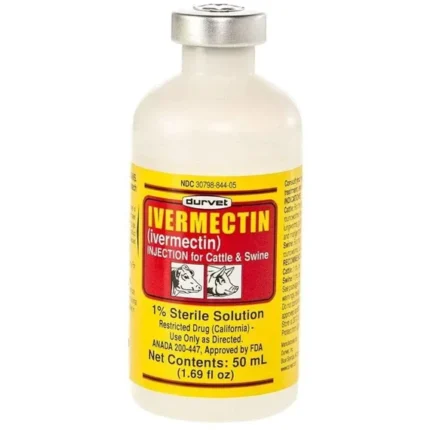
Buy Ivermectin Injection 1% Sterile Solution – Usage
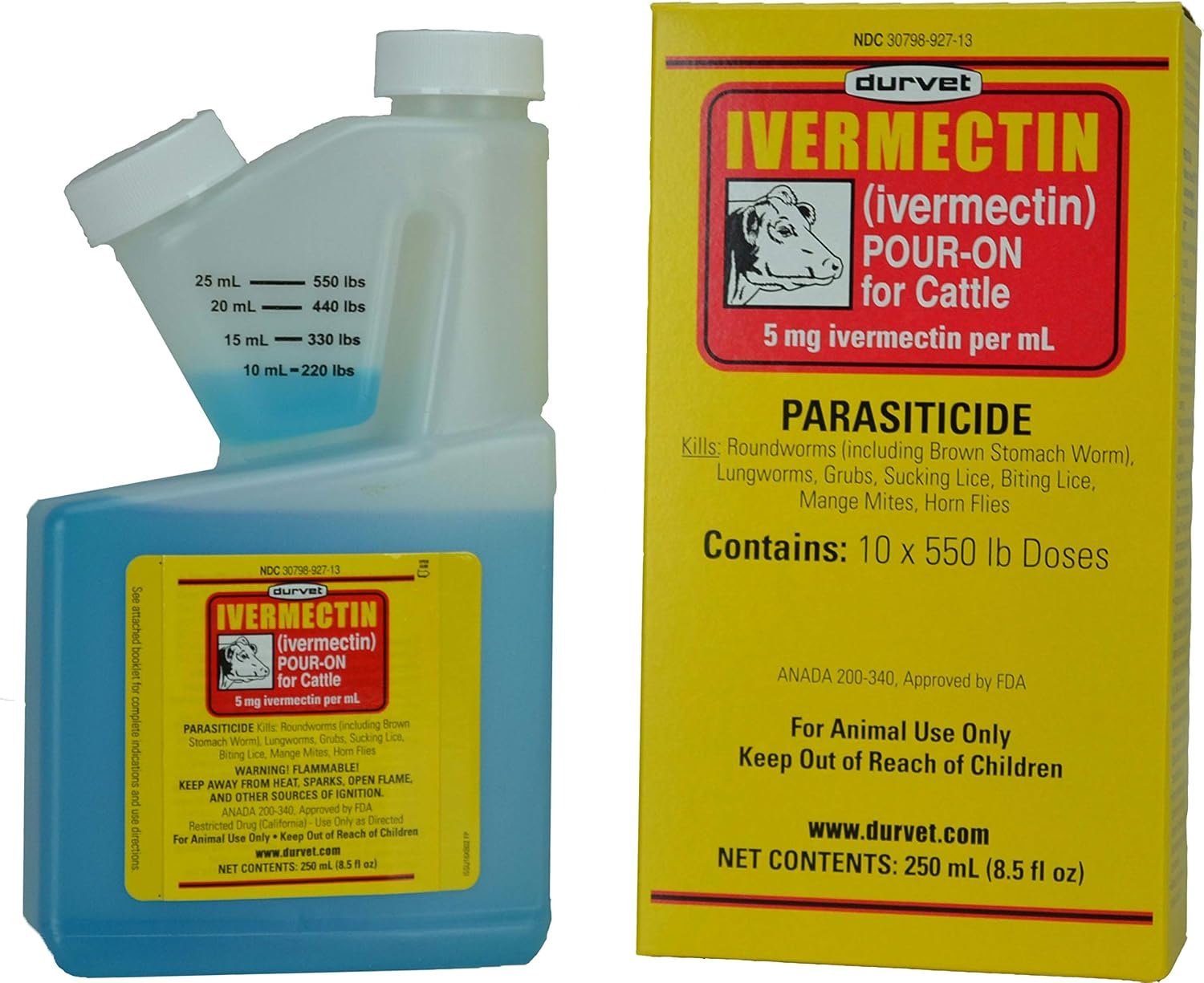
Durvet Ivermectin Injection 1% Sterile Solution is a parasiticide for the treatment and control of internal and external parasites of cattle and swine. Ivermectin Injection is indicated for the effective treatment and control of harmful species of gastrointestinal roundworms, lungworms, grubs, sucking lice and mange mites in cattle. Ivermectin Injection is indicated for the effective treatment and control of harmful species of gastrointestinal roundworms, lungworms, lice and mange mites in swine. Effective against a wide range of external and internal parasites in beef cattle and swine. Ivermectin 250 ml
- Convenient: single, small volume dose required
- Effective: causes paralysis and death of parasites and helps prevent reinfection
- Package safety: rigid plastic vials provide for a firm grip and prevent breakage, individual vial cartons protect vial contents from sunlight
- Economical: inexpensive Ivermectin 250 ml
- Cattle dosage: 1 mL per 110 lb. body weight
- Swine dosage: 1 mL per 75 lb. body weight
Packaging:
Available in Vials of 50 mL, 250 mL, and 500 mL
is indicated for the effective treatment and control of harmful species of gastrointestinal roundworms, lungworms, grubs, sucking lice and mange mites in cattle. Ivermectin Injection is indicated for the effective treatment and control of harmful species of gastrointestinal roundworms, lungworms, lice and mange mites in swine. Effective against a wide range of external and internal parasites in beef cattle and swine. Ivermectin 250 ml
- Convenient: single, small volume dose required
- Effective: causes paralysis and death of parasites and helps prevent reinfection
- Package safety: rigid plastic vials provi



Reviews
There are no reviews yet.